
2026-10-06 · Frank Kowalski
What Influences Sewer Line Repair Costs in 60634
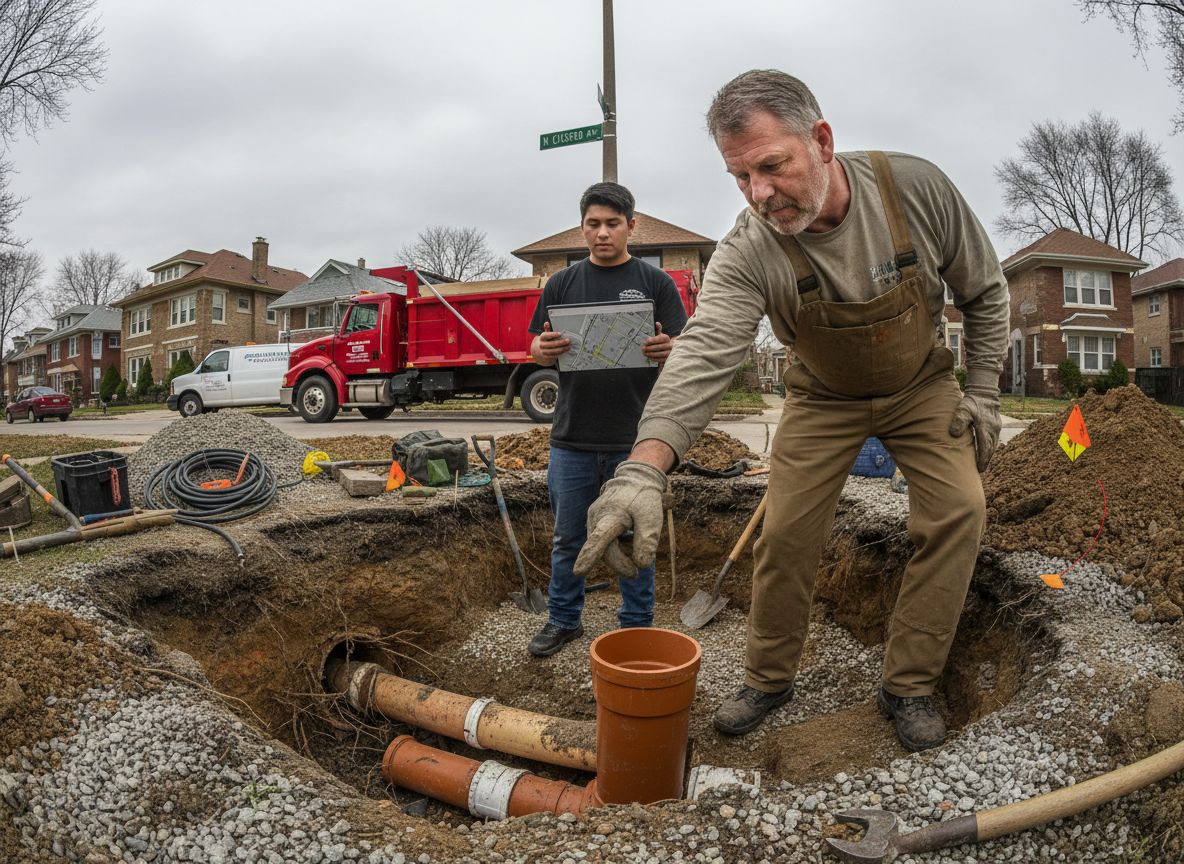
Sewer line repair costs in Chicago's 60634 area, encompassing neighborhoods like Dunning, Portage Park, and Jefferson Park, generally fall between $3,000 and $20,000. This wide range is influenced by several critical factors, including the extent and nature of the damage, the material and age of your existing sewer line, the chosen repair method, and the accessibility of the affected section. For instance, a minor crack in an easily accessible PVC pipe might be on the lower end, while a collapsed cast iron sewer line requiring extensive excavation under a mature oak tree in a densely populated block will undoubtedly be at the higher end. Understanding these variables is key to anticipating your potential expenses when facing a sewer line issue on your property.
Understanding the Type and Severity of Sewer Line Damage
The initial and most significant factor in determining repair costs is the type and severity of the sewer line damage. A simple clog that can be cleared with hydro-jetting will cost significantly less than a complete pipe collapse. Common issues we encounter in the 60634 area include tree root intrusion, especially in older neighborhoods with mature parkway trees, pipe bellies where sections of the pipe have sagged, and fractures due to ground movement or age. A sewer camera inspection is always the first step to accurately diagnose the problem. This allows our technicians to pinpoint the exact location and nature of the damage, whether it's a minor crack, a significant break, or a full-blown collapsed sewer line. The more extensive and complex the damage, the more labor and materials will be required, directly impacting the final cost.
The Impact of Sewer Pipe Material and Age
The material and age of your existing sewer pipes play a crucial role in repair costs. Many homes in Chicago 60634, particularly those built before the 1970s, still utilize clay tile pipes or cast iron pipes. These materials are more prone to issues like cracking, corrosion, and root infiltration compared to modern PVC or ABS pipes. For example, clay sewer pipe problems are common due to their brittle nature and numerous joints, which are prime entry points for tree roots. Similarly, cast iron sewer pipe problems often involve rust and deterioration over decades, leading to weak spots and eventual collapse. Repairing or replacing these older materials can be more challenging and costly due to their fragility and the specialized techniques often required. Newer PVC pipes, while not immune to damage, are generally easier and less expensive to repair.
Repair Method: Trenchless vs. Traditional Excavation
The chosen repair method is another major cost differentiator. Traditionally, sewer line repairs involved trenching, which means excavating a significant portion of your yard, driveway, or even sidewalk to access the damaged pipe. This method is labor-intensive, disruptive, and often incurs additional costs for landscape restoration. However, advancements in technology have introduced trenchless sewer line repair options, such as sewer pipe lining and pipe bursting. While the upfront cost for trenchless methods might sometimes seem higher than a small, localized excavation, they often prove more cost-effective in the long run by avoiding extensive property damage and restoration expenses. For larger sections of pipe replacement, especially under paved areas, trenchless methods can save thousands in landscaping and concrete work alone.
Accessibility and Location of the Damaged Sewer Line
The accessibility of the damaged sewer line significantly influences labor costs. A pipe located directly under an open lawn is far easier and quicker to access than one buried beneath a mature oak tree, a concrete patio, or even under the foundation of your home. In densely populated areas like Portage Park or Jefferson Park, where property lines are close and access might be restricted, specialized equipment or more intricate digging techniques may be necessary. Furthermore, the depth of the sewer line also matters; deeper lines require more extensive excavation. If the damage extends to the public sewer main connection, additional permits and coordination with the city of Chicago may be required, adding to the complexity and overall expense of the repair.
Emergency Services and Additional Costs
When a sewer line issue escalates to an emergency, such as a severe backup causing wastewater to enter your home, the urgency often translates to higher costs. Emergency sewer line repair services, while critical for preventing further damage and health hazards, typically involve premium rates for after-hours or weekend work. Beyond the direct repair, other potential costs to consider include: permits required by the city of Chicago for any significant excavation or sewer line work; property damage restoration for landscaping, concrete, or asphalt; and potential costs for initial diagnostics like video inspections or locating services if not included in the repair estimate. It's always advisable to get a detailed, upfront quote that outlines all potential expenses before work begins.