
2026-10-06 · Frank Kowalski
How Tree Roots Affect Sewer Lines on Chicago's West Side
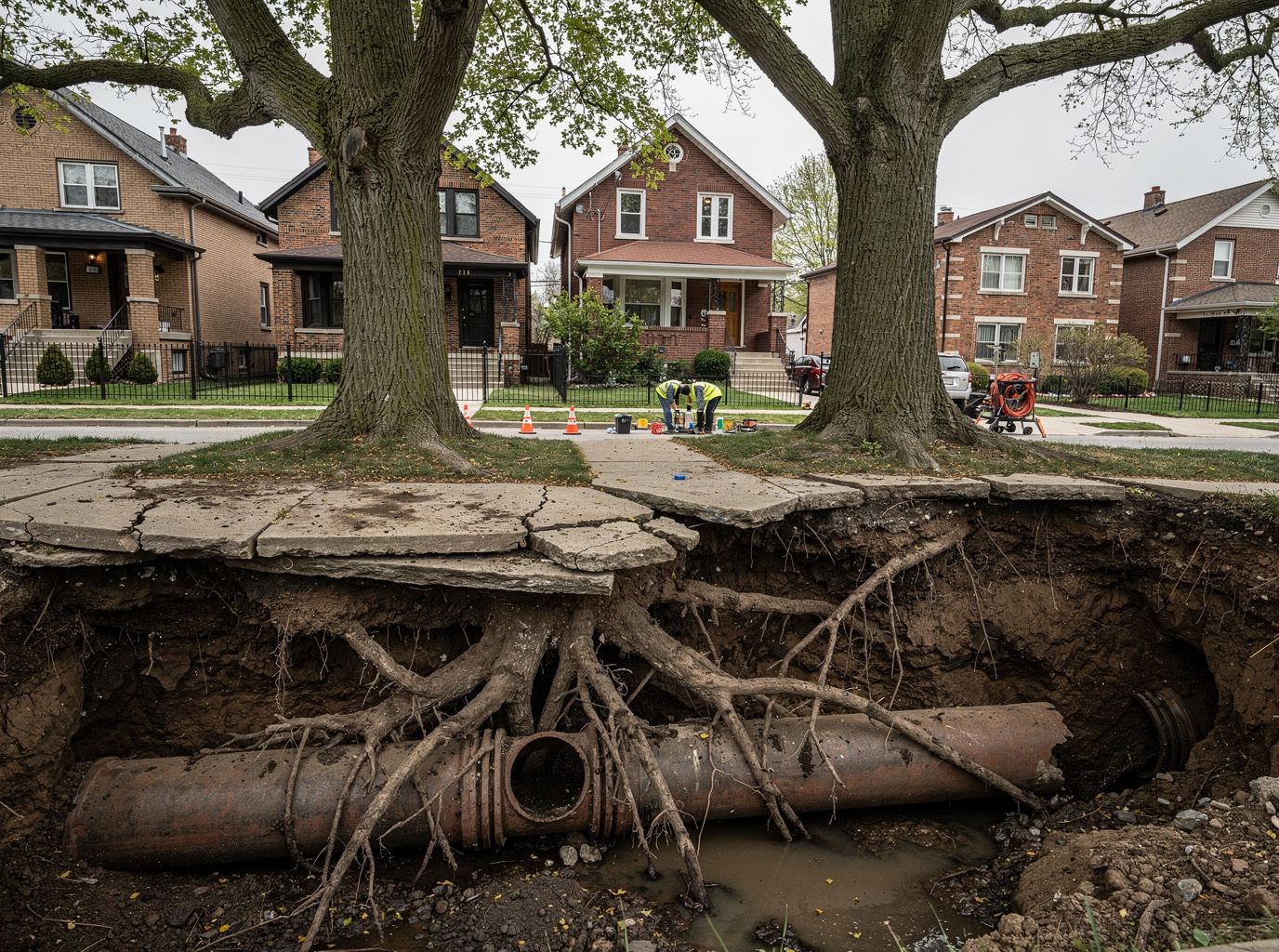
Tree roots are a major culprit behind sewer line issues on Chicago's West Side, particularly in older neighborhoods like Dunning, Portage Park, and Jefferson Park, where mature trees line the streets and properties. These roots are naturally drawn to the moisture and nutrients found within sewer pipes, infiltrating them through even the smallest cracks, loose joints, or compromised seals. Once inside, they continue to grow, creating a dense mass that can partially or completely block the flow of wastewater, leading to slow drains, recurring backups, and eventually, structural damage to the pipe itself. The problem is exacerbated by Chicago's clay soil, which can shift and settle, putting stress on older sewer lines and creating entry points for opportunistic roots.
Why West Side Trees are a Problem for Sewer Lines
The West Side of Chicago, including the 60634 zip code, is characterized by its established residential areas with a significant number of mature trees. Many of these trees, like maples, oaks, and elms, have extensive root systems that can spread far beyond their canopy. Properties in areas like Dunning and Portage Park often feature original sewer lines, some dating back 50 to 100 years, made of materials like clay tile or cast iron. These older pipes are inherently more susceptible to root intrusion than modern PVC. Clay pipes, in particular, have numerous joints that can loosen over time, creating perfect entry points. Cast iron, while durable, can corrode and crack, offering similar vulnerabilities. The combination of aging infrastructure and large, thirsty trees creates a perfect storm for root-related sewer problems.
How Tree Roots Infiltrate and Damage Pipes
Tree roots don't actively "break" pipes; rather, they exploit existing weaknesses. They are incredibly sensitive to moisture and will grow towards any water source, including the condensation on the exterior of a sewer pipe or the tiny amount of moisture seeping from a hairline crack. Once a root finds an entry point, it will grow into the pipe. Inside the pipe, the roots thrive on the wastewater, growing thicker and longer. This growth can lead to several types of damage: first, they form a root ball that obstructs flow, causing backups. Second, as they expand, they exert pressure on the pipe walls, widening cracks and potentially leading to a cracked sewer pipe or even a full collapsed sewer line. This pressure can also dislodge pipe sections, creating offsets that further impede flow and collect debris.
Identifying the Signs of Root Intrusion
Recognizing the early warning signs of tree root intrusion can save homeowners in Chicago 60634 significant repair costs. One of the most common indicators is slow drains throughout the house, not just in one fixture. You might notice your toilet not flushing completely or water draining sluggishly from sinks and showers. Another clear sign is frequent or recurring sewer backups, especially after heavy rain, as the roots prevent water from flowing freely. Gurgling sounds coming from toilets or drains can also indicate a blockage. Outside, lush, green patches of grass directly above your sewer line, even during dry spells, might suggest that roots have compromised the pipe and are leaking nutrient-rich wastewater into the soil. If you suspect roots are causing issues, a professional sewer camera inspection is the most accurate way to confirm the problem and assess the extent of the damage.
Effective Solutions for Tree Root Problems
Once tree roots have invaded your sewer line, several repair options are available, depending on the severity of the damage. For minor intrusions, mechanical root cutting using a hydro-jetter or a specialized auger can clear the blockage. This method is often a temporary fix, as roots will typically grow back. For a more lasting solution, especially if the pipe has structural damage, a sewer pipe lining procedure can be performed. This trenchless method involves inserting a resin-soaked liner into the existing pipe, which then cures to form a new, seamless pipe within the old one, effectively sealing off root entry points. In cases of severe damage or a broken sewer line, a full sewer line replacement may be necessary. This can involve traditional trenching or modern trenchless techniques like pipe bursting, which minimizes disruption to your property.
Prevention is Key for Chicago Homeowners
Preventing tree roots from invading your sewer lines is often more cost-effective than dealing with the aftermath. If you're planting new trees on your property in areas like Norridge or Harwood Heights, choose species with less aggressive root systems and plant them a safe distance (at least 10–20 feet) from your sewer line. Consider installing root barriers – physical barriers made of plastic or metal that are buried in the ground to deflect roots away from pipes. Regular professional maintenance, such as an annual sewer camera inspection, can help detect early signs of root intrusion before they become major problems. For older homes with mature trees, periodic root cutting might be necessary to manage growth. Understanding the risks and taking proactive steps can help protect your sewer lines from the persistent threat of tree roots, especially given Chicago's climate and the age of much of its infrastructure. For more insights into local plumbing challenges, read our article on Winter Sewer Line Clogs in Chicago 60634.